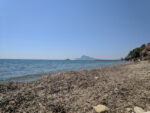
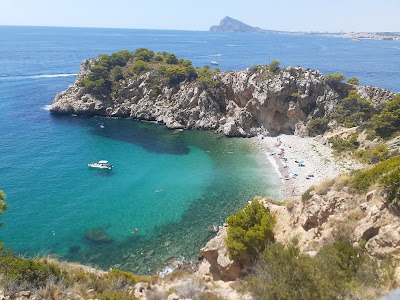
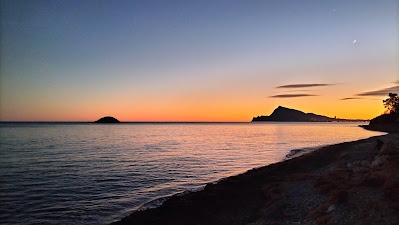
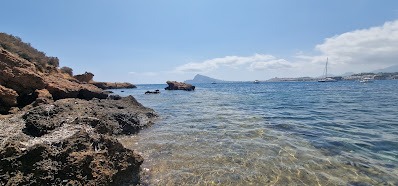
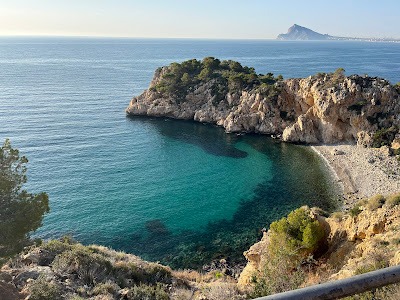
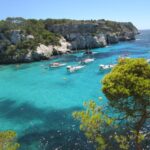
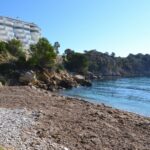
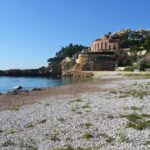
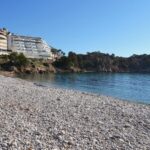
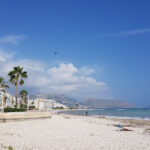
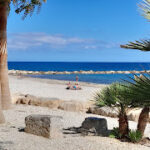
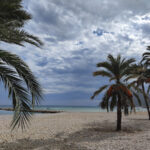
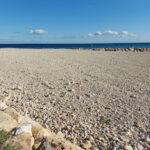
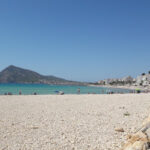
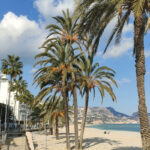
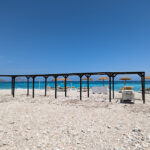
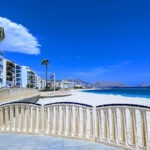
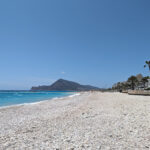
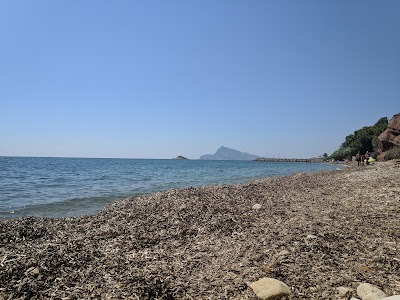
Solsida Beach is a peaceful, nudist and pet-friendly cove hidden along the Altea coastline.
Surrounded by cliffs and untouched by tourism, it offers a quiet escape into nature — where clothing is optional, dogs are welcome, and calm is guaranteed.
I created Welcome to Alicante in 2019 to help travelers explore the province with real local insight and practical tips.
Thanks for reading and Welcome to Alicante!
Show this post to your friends!
Solsida Beach || Full Guide
This guide to Solsida Beach covers everything you need — how to get there, what to expect, and why it’s worth it.
If you’re after nature, freedom, and no crowds, you’re in the right place.
In this article:
Where is Solsida Beach?
Cala Solsida is located just north of Altea, on Spain’s Costa Blanca.
Hidden between the cliffs near the Porto Senso marina, it’s part of the Galera del Mar area — a quiet residential zone about 10–15 minutes by car from Altea’s town center.
The beach isn’t visible from the road and can’t be reached by car directly; you’ll need to park nearby and walk down a short, rocky path.
The easiest way to find it is by navigating to “Calle Tórtola” or “Urbanización Isla de Altea” on Google Maps, then following the coastal trail signs until you reach the sea
Parking and Accessibility
There’s no direct vehicle access to Solsida Beach, but parking is usually easy in the nearby residential streets, especially around Calle Tórtola or the Isla de Altea complex.
From there, it’s a 5–10 minute walk down a rocky path with some steps and wooden walkways.
The trail isn’t difficult, but it’s not suitable for wheelchairs or strollers.
Wear good shoes, pack light, and be ready for a short but scenic descent to one of Altea’s most peaceful beaches.
Facilities and Services
La Solsida Beach (Altea) is a fully natural, undeveloped cove — which means there are no facilities. You won’t find toilets, showers, beach bars, sunbeds, or lifeguards here. It’s a bring-everything-you-need kind of place.
“
Lovely naturist beach, nice and quiet, but take water shoes with you when you go into the sea”
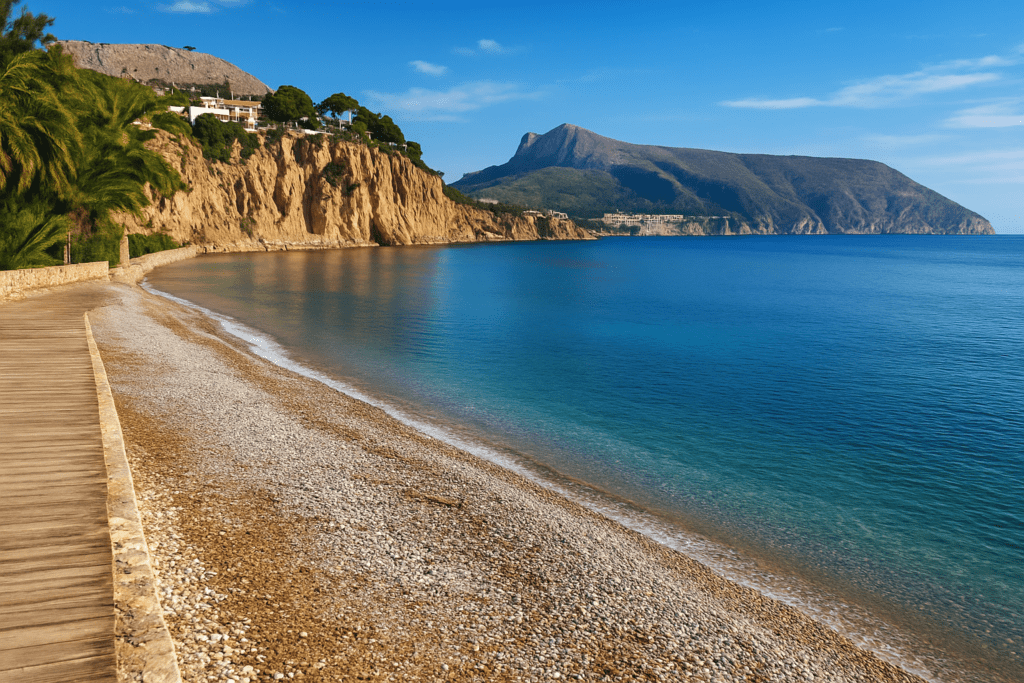
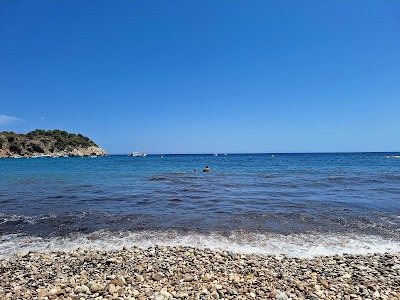
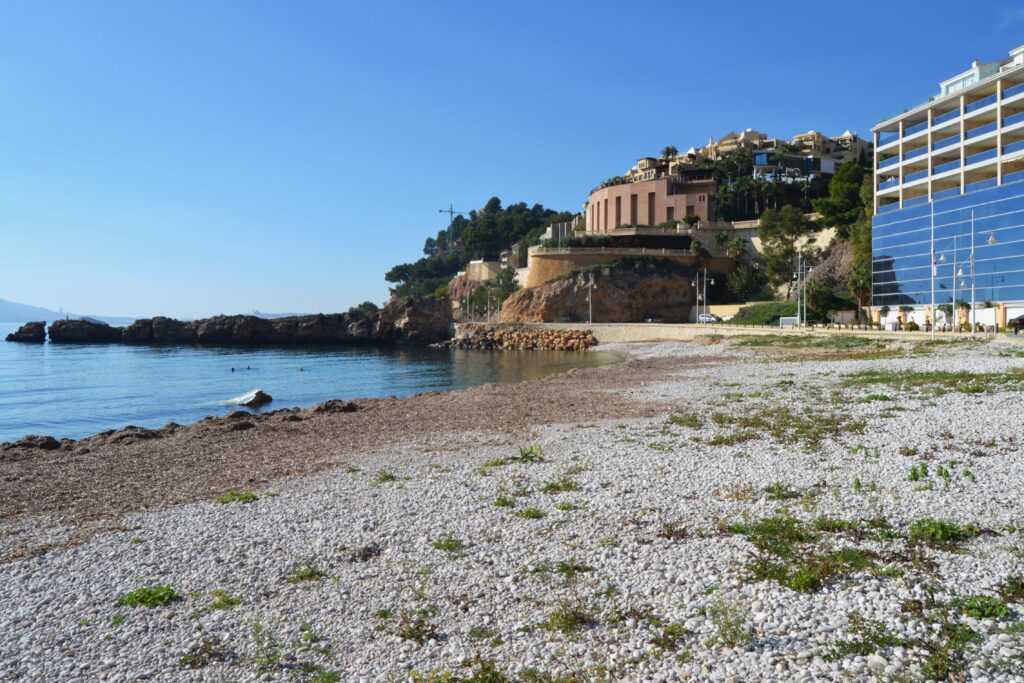
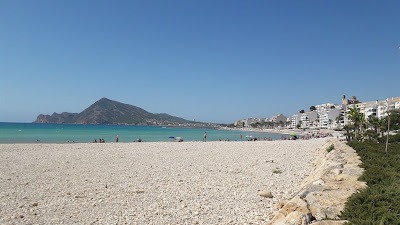
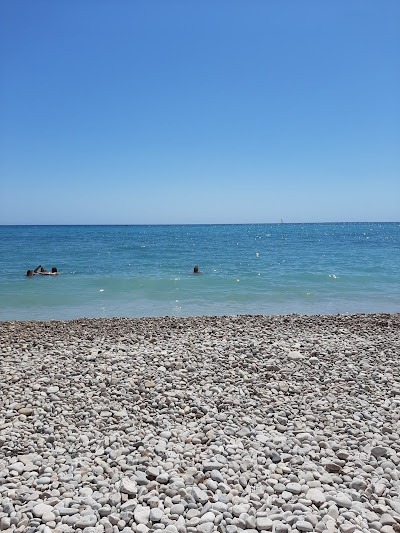
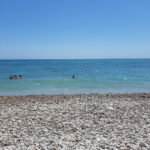
Solsida Beach is made up of smooth pebbles and large rounded stones, not fine sand. The shore is firm and slightly uneven, so bringing a beach mat or chair is recommended for comfort.
The water is crystal-clear, with a turquoise hue that contrasts beautifully with the rocky seabed and the green cliffs behind. Thanks to the absence of sand, the sea stays clean and transparent, ideal for snorkeling.
The water is usually calm and shallow near the shore, with temperatures ranging from 20°C in spring to 26°C in summer — refreshing but comfortable for long swims.
Google Ad
Quick Overview
Type of beach
Natural, nudist, non-urban
Water type
Crystal clear, gentle waves
Sand type
White stones / pebbles
Parking
Limited, access via footpath
Facilities
No showers or lifeguards
Dog friendly?
Yes, but no dedicated services
Recommended for
Naturists, couples, peaceful travelers
Best time to visit
June to September
What to Do at Solsida Beach
Solsida is all about slow, simple pleasures.
Swim in calm, clear waters. Sunbathe — with or without a swimsuit — on smooth pebbles. Bring your snorkel and explore the rocky seabed, home to small fish, sea stars, and underwater plants. It’s also a great place to read, meditate, or just lie back and listen to the sound of the waves.
For dog owners, it’s one of the few beaches in Altea where your pet can join you in the water.
Weather and Best Time to Visit
The best time to enjoy Solsida Beach is between May and October, when the Costa Blanca sees long, sunny days and warm sea temperatures.
July and August offer the hottest weather and perfect conditions for swimming and snorkeling — yet Solsida remains surprisingly quiet even in high season.
Avoid midday sun in summer (12–4 PM) — mornings and late afternoons are ideal for both comfort and lighting.
Local Tips & Fun Facts
Locals know that early mornings are the best time to enjoy Solsida at its calmest — the light is beautiful, the sea is flat, and you might have the whole beach to yourself.
If you’re into snorkeling, look for the small rocky islet about 200 meters from shore; there’s even a natural “window” formation underwater.
Bring water shoes — the pebbles can be slippery, and sea urchins sometimes hide between rocks.
And here’s a rare bonus: Solsida is the only beach in Altea where dogs can swim freely. Just remember to leave no trace — it’s a place locals love for its untouched feel.
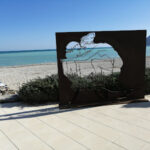
Solsida Beach in Pictures
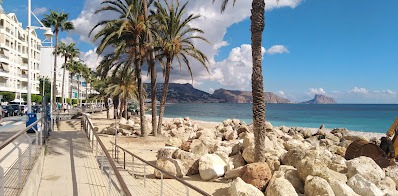
Discover the peaceful beauty of this hidden cove — from rocky shores and turquoise waters to quiet sunsets and natural landscapes.
Not directly. You’ll need to park nearby (around Calle Tórtola or Isla de Altea) and walk 5–10 minutes down a rocky trail. The path includes steps and uneven terrain — not recommended for wheelchairs or strollers.
Yes, the waters are usually calm and shallow near the shore, but there’s no lifeguard — so swim at your own risk and stay close if you’re not a confident swimmer.
Absolutely. The rocky seabed and clear waters make it one of the best spots in the area for snorkeling. Don’t forget your mask and fins.
Other interesting things for you
Is Solsida Beach easy to access?
Not directly. You’ll need to park nearby (around Calle Tórtola or Isla de Altea) and walk 5–10 minutes down a rocky trail. The path includes steps and uneven terrain — not recommended for wheelchairs or strollers.
Is the beach nudist-only?
No, but nudism is common and officially allowed. Visitors can choose to go nude or wear swimwear — everyone is welcome as long as they’re respectful.
Are dogs allowed?
Yes! Solsida is the only beach in Altea where dogs are officially allowed to swim and roam freely.
Is there any shade on the beach?
Very little. There are no trees or umbrellas, so bring your own sunshade if you plan to stay for a while.
Are there lifeguards or services?
No. Solsida is a wild, natural beach with no lifeguards, bars, toilets, or rental services. Bring everything you’ll need.
Can I swim safely?
Yes, the waters are usually calm and shallow near the shore, but there’s no lifeguard — so swim at your own risk and stay close if you’re not a confident swimmer.
When is the best time to go?
May to October is ideal. Go early in the morning or late in the afternoon for cooler temperatures, softer light, and fewer people.
Is it good for snorkeling?
Absolutely. The rocky seabed and clear waters make it one of the best spots in the area for snorkeling. Don’t forget your mask and fins.
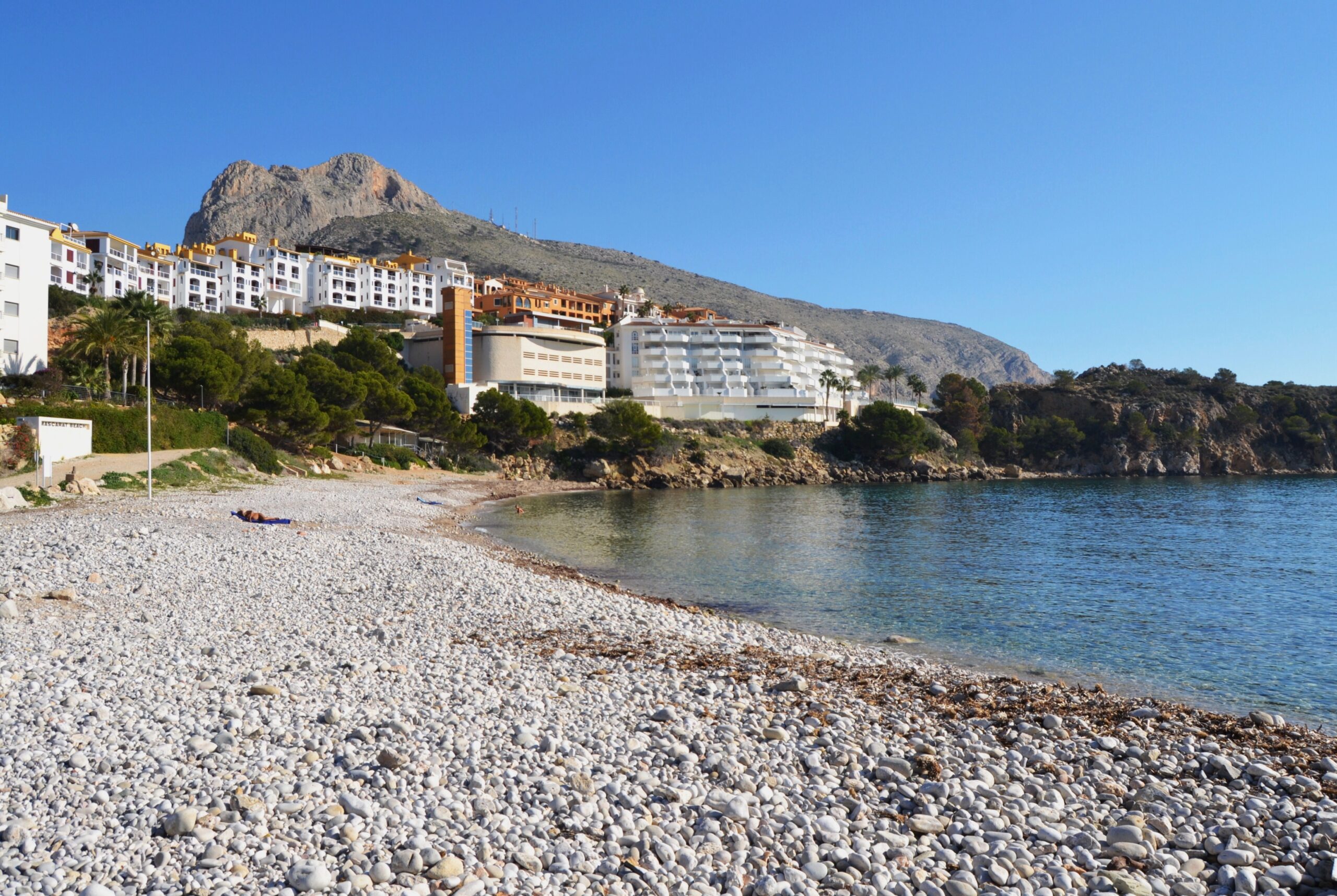
Mascarat Beach, located in Altea, is a fine pebble cove situated behind the Altea Marina, within the Serra Gelada Natural Park. It is characterized by being a gravel cove, with rocks and no sand, and its transparent waters are ideal for water sports such as snorkeling. It is an ideal place to disconnect, where you can sail by boat and enjoy the beach bars on the beach.
Ad, Google thinks you’re interested in this
Why is Mascarat Beach so famous?
Mascarat Beach stands out for its cliffs, crystal-clear waters, and marine life, making it ideal for snorkeling and kayaking. It offers easy access, summer services, and a tranquil atmosphere in a protected environment.
Location of the Mascarat beach. Where is it and how to get there?
Mascarat Beach is located in the town of Altea, in the province of Alicante, Spain. It is situated north of the town’s center, behind the Altea Marina and within the Serra Gelada Natural Park.
Ad, Google thinks you’re interested in this
How to get to mascarat beach from Alicante
By Car
This is the best option. It will take you less than an hour to get there and you can enjoy beautiful views while driving along the AP-7 towards Valencia.
By Public Transport
Unfortunately there is no way to get to this beach by public transportation. In case you don’t have your own car you can try Uber or Cabify.
Ad, Google thinks you’re interested in this
How to get to Mascarat Beach from Benidorm
By Car
This is the best option. It will take you about 20 minutes
By Public Transport
Unfortunately there is no way to get to this beach by public transportation. In case you don’t have your own car you can try Uber or Cabify.
Mascarat Beach Features
Type of sand and water:
Mascarat Beach is a pebble and rock cove with crystal-clear waters, perfect for snorkeling and diving thanks to its rich seabed with Posidonia meadows.
Size and length:
It has a length of 280 to 300 meters and a width of 21 meters.
Surroundings:
From the beach, you can admire the views of the majestic Sierra Bernia mountains, which rise as a backdrop. In addition, its proximity to the mouth of the Algar River adds a special touch to the landscape.
Ad, Google thinks you’re interested in this
Activities and Experiencies in Mascarat Beach
Nudism and Freedom:
Mascarat Beach is a nudist beach, but it is also frequented by non-nudists, fostering an atmosphere of tolerance and respect.
Water Sports:
Its crystal-clear waters are perfect for snorkeling, diving, and scuba diving. It’s also a great starting point for kayaking and paddle surfing, with boat rentals and mooring areas available.
Enjoying Nature:
From a rocky outcrop, you can observe posidonia meadows and marine life. Additionally, a viewpoint in the residential area offers stunning panoramic views.
Hiking and Adventure:
A trail from the beach leads into the Mascarat Canyon, passing by the iconic Mascarat bridges, perfect for trekking enthusiasts.
Marina Lifestyle:
The Campomanes Marina, close to the beach, offers fresh seafood, upscale restaurants, and vibrant nightlife spots.
Rock Climbing with a View:
The impressive limestone rock wall extending into the sea makes Mascarat a top destination for climbing enthusiasts.
Services and amenities in Mascarat Beach
🌞 Sunbeds and umbrellas – Rentals available for extra comfort.
If you have already been to Playa Mascarat, tell us about your experience in the comments. What was your favorite moment? Any tips for future visitors?
Introduction. What is theL’Espigó Beach and why is so famous?
About l’Espigó Beach
The Playa de l’Espigó is a quiet and beautiful beach located in Altea, Alicante. It is located near the center of Altea, at the north end of the promenade and next to the marina. The beach is made of pebbles and fine gravel, and its waters are crystal clear, making it ideal for swimming and snorkeling. It has services such as sunbed and umbrella rental, showers and footbaths, and lifeguards during the high season (from June to September).
Why is l’Espigo Beach so famous?
Playa de l’Espigó in Altea is a destination that attracts visitors for a combination of factors.
Its central location, next to the marina, makes it easily accessible to both residents and tourists, allowing them to enjoy the beach without straying too far from urban amenities.
Ad, Google thinks you’re interested in this
Location of the Espigo Beach. Where is it and how to get there?
It is located near the center of Altea, next to the marina, which facilitates access by foot or by car.
If you are in Alicante, Valencia or Barcelona you have different options to get there, either by car or by public transport. We indicate them below.
How to get to l’espigo beach from Alicante
By Car
This is the best option. It will take you less than an hour to get there and you can enjoy beautiful views while driving along the AP-7 towards Valencia.
By Public Transport
This option is much slower than driving your own car, but it is an available and inexpensive option.
It is best to find a bus to take you there. There are different options and it is not difficult to find them.
Another option is to take the tram L1 to Benidorm and from there the tram L9 to Garganes. This is the option that will take you the longest, about 2 hours according to google.
Ad, Google thinks you’re interested in this
How to get to Espigo Beach from Benidorm
By Car
This is the best option. It will take you about 20 minutes
By Public Transport
The best option is to take the Tram, line 9 from Benidorm. It will take you about 40 minutes.
There are also bus lines such as L10 which takes about 50 minutes.
Ad, Google thinks you’re interested in this
How to get to Espigo Beach from Valencia
By Car
The best option is the AP-7, the coastal highway. It is faster, has no tolls and has wonderful views.
By Public Transport
This option is not the most advisable, as you will have to look for a bus and combine it with other transportation such as tram or other bus lines.
You can check all the options on the map below.
Espigo Beach Features
Type of sand and water:
Covered with gravel and pebbles, which contributes to the cleanliness and clarity of its waters. These conditions make it ideal for swimming and snorkeling.
Size and length:
The beach extends for an approximate length of 500 meters, with an extension of more than 300 meters, offering ample space for visitors.
Surroundings:
From the beach, you can admire the views of the majestic Sierra Bernia mountains, which rise as a backdrop. In addition, its proximity to the mouth of the Algar River adds a special touch to the landscape.
Activities and Experiencies in l’espigo Beach
Water activities:
Kayaking & Paddle Surfing: The calm waters and nearby Altea marina make it easy to enjoy these activities.
Snorkeling: Clear waters and rocky areas provide a great spot to explore marine life.
Relaxation and well-being:
Playa de l’Espigó is a peaceful spot to sunbathe, relax, and enjoy the Mediterranean. Its gravel and pebble shore make suitable footwear recommended for walks, while its quiet atmosphere offers a perfect escape from the city.
Gastronomy:
The nearby promenade has restaurants and bars serving local cuisine like paella, fresh fish, and tapas, with some offering scenic sea views.
Cultural exploration:
The beach is close to Altea’s old town, where you can explore its charming streets, iconic church, and craft shops. It also hosts cultural events and festivals throughout the year.
Nature and landscapes:
Views of the Sierra Bernia: The beach offers spectacular views of the Sierra Bernia mountains.
Mouth of the Algar River: The beach is located near the mouth of the Algar River, allowing you to visit this area.
Ad, Google thinks you’re interested in this
Services and amenities in l’Espigo Beach
General Services
Food and drink: Restaurants and bars right on the beach.
Relaxation: Rental of sunbeds and umbrellas in season.
Amenities: Showers and footbaths to cool off.
Accessibility: Beach adapted for people with reduced mobility.
Parking: Parking areas nearby for added convenience.
Safety and information:
Safety: Lifeguard surveillance.
Information: Updated sea conditions.
Aditional Services:
Chiringuito: Beach bar.
Promenade: For strolling.
Transport: Bus/Taxi nearby.
Best Time to Visit the Espigo Beach
The best time to visit Playa de l’Espigó depends on your preferences:
June to September (High season): Ideal for warm weather, full services (hammocks, restaurants, lifeguards), water activities, and cultural events.
Outside of high season: Perfect for those seeking tranquility, fewer crowds, and enjoying the mild weather and nature.
Some tips for visiting l’Espigo Beach
Protect yourself from the sun: Use sunscreen, especially in summer.
Comfortable footwear: The beach is made of gravel and pebbles, so wear suitable shoes for walking.
Stay hydrated and nourished: Although there are restaurants nearby, bringing water and snacks can be useful.
Ad, Google thinks you’re interested in this
Visitors Reviews and Pictures
It is an excellent beach area. With lifeguards in Sumner months. Advised to wear beach shoes as some stones are quite big. Plenty of cafes, with WC facilities and a love Chringuito on the far end of the beach where you can hear the sea breaking on the rocks
Lovely walk out to the Algar river from Altea. Altea has been sunny all of November and warm, over 20C, most days. Beautiful old village with hills and mountains rising straight from the sea. The sheltered bay is covered in stones many of which appear to have fossils in them.
Are you thinking of visiting Altea or moving there? Find out here everything you need to know about this place.
Whether you want to visit Altea as a tourist or if you want to spend some time there, this blog will help you to get to know the area and solve all your doubts.
Introduction. What is Altea and why is it so famous?
About Altea
Altea is a hidden gem on Spain’s Costa Blanca, offering a perfect blend of Mediterranean charm, rich history, and breathtaking coastal views.
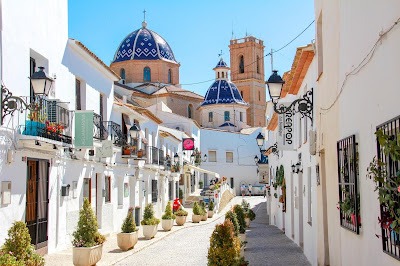
Known for its picturesque old town with whitewashed houses, cobbled streets, and iconic blue-domed church, Altea captivates visitors with its artistic atmosphere and laid-back lifestyle.
Altea is the most beautiful village in Spain
In 2023 National Geographic published an article with the 100 most beautiful villages in Spain and Altea was placed as the first.
Ad, Google thinks you’re interested in this
Why is Altea so famous? Is it woth to visit Altea?
Altea stands out for its privileged location on the Costa Blanca, where it enjoys an exceptional microclimate, with pleasant temperatures throughout the year. Thanks to this, along with its paradisiacal coast, Altea has always been a haven full of beauty and peace for artists and bohemians (and also pirates).
If you’re looking for a quiet and beautiful place, coastal with white houses and a historic center full of history, Altea is for you.
Location of Altea. Where is it and how to get there?
Altea is a very well-connected place by road, air, sea, and train.
Located on the shores of the Mediterranean, south of Calpe and north of Alfaz del Pi, Altea is easily accessible by road via the N-332 and the AP-7.
The Alicante-Elche Airport is about 60 km to the south, and the Valencia Airport is 116 km to the north. Altea also has three marinas and is connected by bus to nearby cities and by tram to other towns on the Costa Blanca.
Where is Altea in Spain?
Altea is a municipality located in the Valencian Community, Spain, specifically in the province of Alicante. It is located on the Mediterranean coast of the Iberian Peninsula, in the section known as the Costa Blanca.
Located about 10 kilometers from Benidorm, about 134 km from Valencia, and about 50-52 kilometers from Alicante.
The town also borders the municipalities of Alfaz del Pi, La Nucía, Callosa de Ensarriá, Jalón, Benisa, and Calpe.
The Sierra de Bernia, to the north of the municipality, serves as a natural barrier and border between the regions of Marina Baja and Marina Alta.
Ad, Google thinks you’re interested in this
How to get to Altea?
By Road:
The N-332 connects Altea with coastal towns like Benidorm and Calpe, while the AP-7 highway (exit 64) links it to the entire coast.
By Air:
The Alicante-Elche Airport (61 km) and Valencia Airport (116 km) provide easy access.
By Train & Tram:
The FGV train and TRAM line 9 connect Altea with Alicante, Dénia, and nearby towns.
By Bus:
ALSA and local buses link Altea with Benidorm, Dénia, Valencia, Madrid, and more. Bus 10 connects Altea with Albir, Alfaz del Pi, and Benidorm.
By Sea:
Altea has three marinas (Marina Greenwich, Altea Yacht Club, and Porto Senso) with 900+ moorings and is 65 miles from Ibiza and Formentera.
Altea in Alicante
Altea, a picturesque coastal town in Alicante, is known for its white-washed old town, beaches, artistic vibe, and status as a Valencian cultural hub. Tourism is its main economic driver.
Altea in Costa Blanca
Altea is one of the most charming destinations on the Costa Blanca, standing out for its whitewashed old town, artistic atmosphere, and stunning coastal views. Strategically located between Benidorm and Calpe, it offers a more tranquil and authentic alternative to the region’s larger tourist hubs
Ad, Google thinks you’re interested in this
General characteristics of Altea. Climate, size, security and more
Climate in Altea
Altea, on the Costa Blanca, enjoys a sunny, Mediterranean climate with warm, dry summers and mild, wet winters.
Temperatures average 18.3°C (65°F) annually, with highs over 30°C (86°F) in summer and lows around 6.5°C (44°F) in winter.
The sea temperature ranges from 16°C (61°F) to 23°C (73°F), and rainfall, averaging 494 mm (19 inches), is mainly in autumn and early winter.
Size and population
Altea, population 23,963 (2024), has grown significantly since the 1960s due to tourism. A third of its population is foreign, mainly from Romania, the UK, and Russia. Covering 34.43 km² (including 6 km of coastline), Altea offers a relaxed atmosphere and a high quality of life.
Ad, Google thinks you’re interested in this
Safety, quality of life and infrastructure
Life Quality in Altea
Altea offers a high quality of life thanks to its privileged natural environment, its pleasant climate and its peaceful atmosphere. The town enjoys a bohemian atmosphere, with workshops of artisans and artists that give it a special charm.
Services and infraestructure
Altea has a wide range of services, including health centers, nearby hospitals in Villajoyosa and Benidorm, supermarkets, pharmacies and schools, as well as sports facilities such as the Nautical Club, Sports City, Municipal Swimming Pool and Tennis and Paddle Club.
Security in Altea
Security is another strong point of Altea, as it is a generally safe place, with a quiet and uncrowded environment, especially outside the high season.
Tourisim and massification
Despite being a major tourist destination, Altea has managed to maintain its charm and quiet atmosphere, which differentiates it from other crowded tourist destinations.
La Marina Altea
Altea’s coastline is home to two major marinas: Altea Yacht Club and Marina Greenwich (Campomanes Marina), both offering top-tier facilities for boating and water sports. Altea’s marinas not only attract nautical enthusiasts but also enhance the town’s charm as a Mediterranean hotspot.
The region of Altea (Altea Region)
Region: Altea is located in the Marina Baja region.
Coastal Location: It is situated in the Bay of Altea, south of Calpe and north of Alfaz del Pi.
Greenwich Meridian: The Greenwich Meridian passes through the northern part of the municipality and its bay.
Boundaries: Altea borders several municipalities: Alfaz del Pi, La Nucía and Callosa de Ensarriá to the south and east, and Jalón, Benisa and Calpe to the north. The latter three belong to the Marina Alta region.
Sierra de Bernia: To the north, the Sierra de Bernia serves as a natural barrier and border between the regions of Marina Baja and Marina Alta.
Distances: Altea is about 10 kilometers from Benidorm, about 134 from Valencia, and between 50 and 52 kilometers from Alicante.
Ad, Google thinks you’re interested in this
Attractions and things to do in Altea
Places of interest in Altea
Old Town (El Fornet): Altea’s old town, with its cobbled streets and white houses, is a charming labyrinth full of picturesque corners and craft shops.
Church of Our Lady of Consolation: The main church of Altea, with its blue domes, is an iconic symbol of the city and a visible landmark from many places.
Plaza de la Iglesia: The church square, located in the heart of the old town, offers panoramic views of Altea and the sea.
Chronicle’s Viewpoint (Wall Viewpoint): This viewpoint, near the church, offers panoramic views of Altea, its port, and the surrounding landscape.
Bellaguarda Tower: An old watchtower located in the oldest neighborhood of Altea.
Galera Tower: A 16th-century coastal watchtower located in the Galera del Mar urbanization.
Bastion and Renaissance Enclosure: 17th-century walls that preserve access gates and buildings from that era.
Roman Aqueduct of Els Arcs: A 2nd-century Roman aqueduct that carried water to the ancient Roman villa of Albir.
Orthodox Church of the Archangel Michael: The first Orthodox temple built in Spain, a replica of a 17th-century Russian church.
Altea Market
Every Tuesday from 08:00 to 14:00, Altea comes alive with its weekly market, a must-visit for both locals and tourists. Spanning Carrer de la Filarmónica (fresh produce) and Camí del l’Algar & Plaza del Ayuntamiento (textiles and accessories), the market offers a vibrant mix of products, including:
Fresh fruits and vegetables from local farms.
Clothing and accessories such as shoes, bags, wallets, and hats.
Handmade crafts and unique artisan goods.
Local delicacies, such as nuts, honey, and spices.
Leisure and nightlife
Altea offers a diverse range of leisure activities, from dining at restaurants with sea views or traditional Mediterranean cuisine to exploring the local market and strolling along the lively promenade.
Outdoor activities and lifestyle
Altea, with its 6 kilometers of coastline, offers a variety of beaches, coves, and cliffs, including the popular La Roda and Olla beaches, as well as more secluded options like Cap Negret and Mascarat. Water sports are popular, and the Sierra de Bernia provides hiking trails. With three marinas and a tranquil atmosphere, Altea is a haven for artists, retirees, and expats.
Albir-Altea promenade
A scenic seaside promenade connects Altea and Albir, stretching from Cap Blanch Beach to Albir Beach. Perfect for walking, jogging, or cycling, it offers stunning sea views and a relaxed atmosphere.
Beaches in Altea
Altea’s 6-kilometer coastline is known for its pebble beaches, crystal-clear waters, and peaceful atmosphere, offering both urban convenience and hidden natural retreats.
Urban Beaches:
Playa de la Roda – The most central and lively beach, next to the promenade, with a Blue Flag distinction and great for water sports.
Playa de l’Espigó – A calm artificial lagoon, perfect for families.
Scenic & Tranquil Beaches:
Playa de la Olla – A serene beach with access to the Isleta de l’Olla and host of the Castell de l’Olla firework festival.
Playa Cap Negret – A quiet, picturesque beach with views of the Sierra de Bèrnia.
Playa Cap Blanch – The longest beach in Altea, connecting with Albir.
Playa del Mascarat – Located under the Sierra de Bèrnia, near Marina Greenwich.
Secluded & Naturist Coves:
Cala Barra Grande & Playa Galera-Solsida – Popular naturist spots.
Punta del Mascarat – A rocky promontory with two small, untouched coves.
Playa Barreta – Next to Puerto Deportivo Campomanes.
Altea Bay
The Bay of Altea, nestled between Calpe and Alfaz del Pi, boasts 6 km of diverse coastline, sunny weather, and picturesque beaches like La Roda and Olla. It’s perfect for water sports, boat trips, and enjoying views from Altea’s old town, with the Sierra de Bèrnia and Serra Gelada nearby.
Greenwich Marina Altea
Marina Greenwich, a prestigious Blue Flag marina near Altea, is uniquely located on the Greenwich Meridian. With 542 berths, modern facilities, and a vibrant commercial area, it’s a haven for boaters and visitors alike, offering water sports and easy access to major airports and the Balearic Islands.
More attractions in Altea
Altea, the “Dome of the Mediterranean,” charms with its historic old town, iconic blue-domed church, stunning views, and artistic vibe.
Pebble beaches, water sports, and marinas cater to beach lovers and sailors, while nearby mountains and natural parks offer hiking.
From local markets to historic landmarks like the Russian Orthodox Church and Roman Aqueduct, Altea offers a rich blend of culture and natural beauty on the Costa Blanca.
Ad, Google thinks you’re interested in this
History, languages and main celebrations. Culture of Altea.
History of Altea
With possible Greek or Arabic origins, Altea’s rich history includes Iberian, Roman, and Muslim periods, culminating in its reconquest by James I of Aragon in 1244. After several repopulation attempts, Altea flourished, particularly after the 18th-century boom and the 20th-century rise of tourism, becoming a haven for artists and a center of bohemian culture.
Languages spoken in Altea
Official Languages: The official languages in Altea are Spanish and Valencian.
Predominance: Valencian is the predominant language in the region, although Spanish is widely spoken and understood. English is also spoken, particularly in tourist-related businesses and areas.
Celebrations and festivities (some of them)
Patron saint festivities: Throughout the year, each district or neighborhood in Altea honors its patron saint with local celebrations.
Mig Any: In February, Altea celebrates the Mig Any festivities with Moors and Christians parades in honor of San Blas, as well as the “Festa del porquet” (piglet festival) in the Plaza de la Iglesia.
Holy Trinity, Saint Anthony, and Saint John: In June, festivities are held in honor of the Holy Trinity, Saint Anthony, and Saint John, featuring the traditional “Plantà de l’Arbret” (planting of the small tree).
Saint Roque, Saint Lawrence, Saint Isidro, and Saint Louis: August in Altea is a month of celebrations honoring Saints Roque, Lawrence (with the “Castell de l’Olla” fireworks), Isidro, and Louis, each with its own festivities.
Moors and Christians festivities: At the end of September, Altea celebrates its patron saint, the Christ of the Sanctuary, with Moors and Christians festivities, featuring parades and battle reenactments.
Castell de l’Olla: The “Castell de l’Olla” is Altea’s most prominent event, an impressive fireworks display over the sea that attracts thousands of visitors every August.
Encontes: This oral storytelling festival is held in May, with events that include stories and songs for all ages.
Easter: During Holy Week, Altea is filled with solemn processions, and a carnival is also celebrated before Lent.
Altea la nova and Altea la vella
Altea la Vella, meaning “Old Altea,” is the historical heart of the municipality, nestled on the mountainside in a rural and tranquil setting. Rich in tradition, it preserves a deep connection to Altea’s past, with centuries-old festivals and a slower pace of life.
In contrast, Altea la Nova represents the town’s more modern and developed areas, closer to the sea and shaped by tourism and urban expansion since the 1960s.
Ad, Google thinks you’re interested in this
Economy and opportunities in Altea. Cost of living, job opportunities and major industries and sectors
Cost of living and commodity prices.
Housing: Housing prices in Altea vary by location, with the old town and beach areas being the most expensive.
Services: Altea has supermarkets, stores, health centers, nearby hospitals, and pharmacies to cover basic needs.
Transportation: Public transportation, including buses and streetcars, connects Altea with other coastal towns.
Food: There are local markets and supermarkets to buy food, and restaurants offer menus at different prices.
Leisure: Altea offers a variety of bars, restaurants, cafes, ice cream shops, and pastry shops, although prices can be higher in tourist areas.
Main industries and economic sectors
Tourism: Tourism is the foundation of Altea’s economy.
Construction: Construction is an important sector, although with ups and downs.
Agriculture: Agriculture, with citrus fruits, complements the local economy.
Fishing: Fishing is traditional, but less economically relevant.
Trade and services: Trade and services are vital for economic activity.
Labor supply and entrepreneurship
Employment: The service sector, especially tourism, is Altea’s main source of employment.
Hotels: Hotels offer diverse job opportunities.
Handicrafts: Local crafts offer opportunities for entrepreneurs.
Investment: Tourism attracts investment, particularly in tourist properties.
Real Estate: The real estate sector offers opportunities in sales, rentals, and management.
Services: Other services like commerce and banking also generate employment.
Education: Education, with schools and a university, creates jobs.